
- Bilateral posterior placement (L3–S1)
- Zero-profile implant design
- Controlled, non-impact insertion
- Nanotex® surface technology
– Bilateral posterior placement (L3–S1)
ION-L™ Key Features
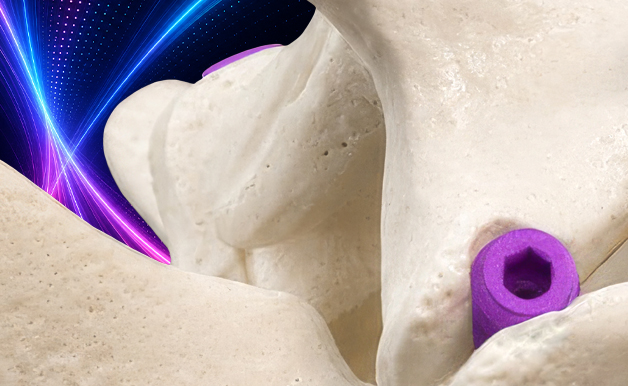
Zero-Profile Design
Designed to sit within the facet region to minimize implant prominence while providing stabilization across the treated segment.
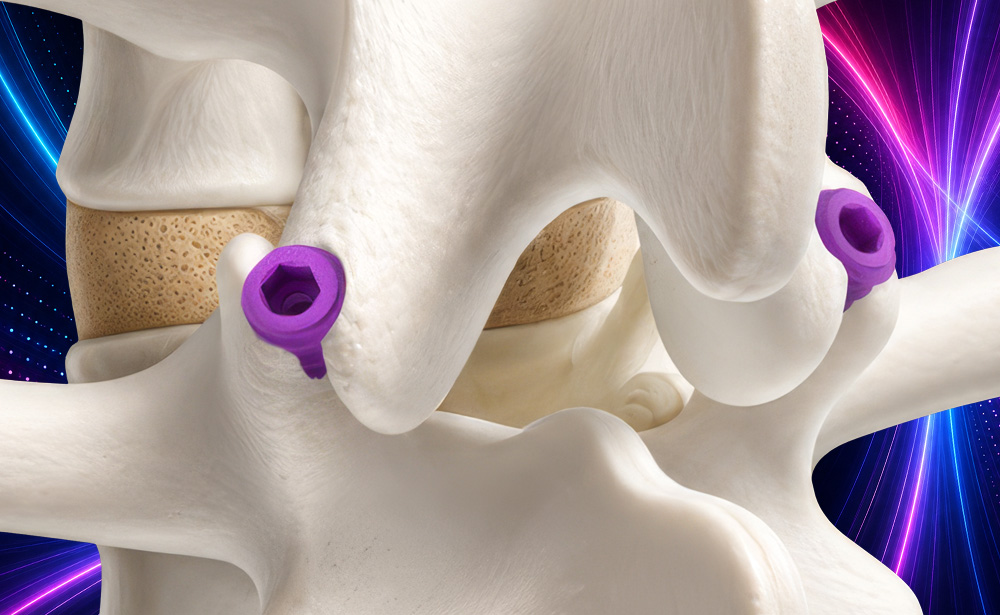
Neutral Joint Positioning
Engineered to support placement without unintended facet joint expansion during insertion.
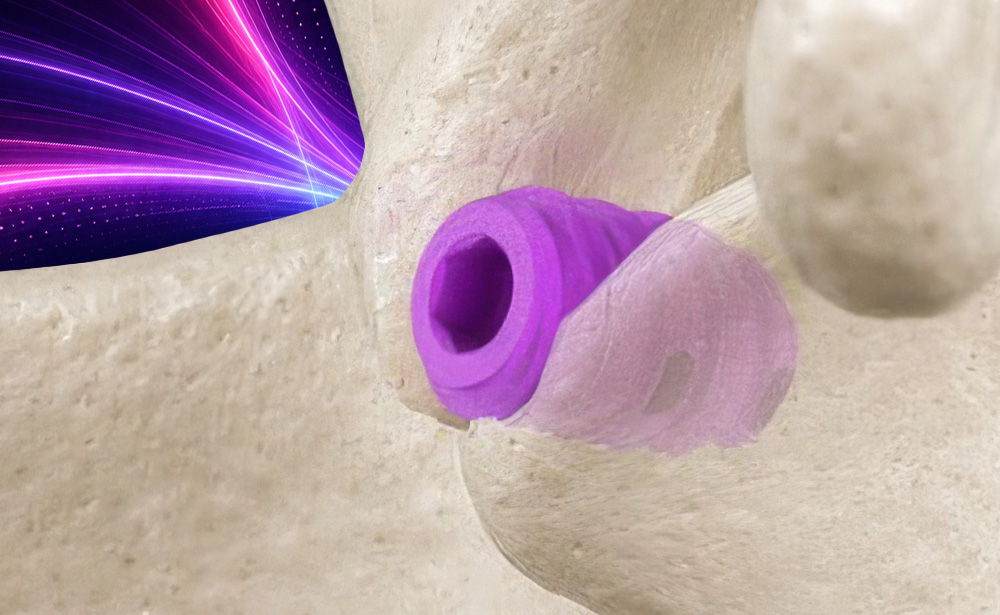
Implant Stability Features
Engineered with engagement features intended to support implant stability following placement.
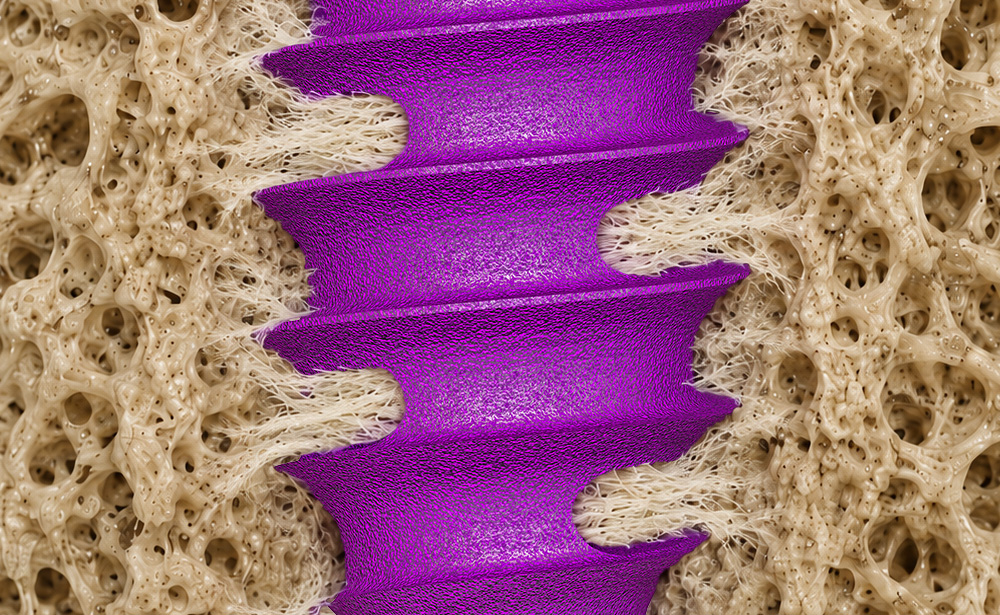
Bone Graft Integration
Fenestrations and open-barrel architecture are designed to support bone graft integration and fusion across the facet joint.
Compatible with Navigation
Compatible with Medtronic’s StealthStation navigation platform, the ION-L navigation instruments are intended to assist surgeons in precisely locating anatomical structures – specifically the lumbar facet joint – during open or minimally invasive spine procedure to support implant placement and surgical workflow efficiency.
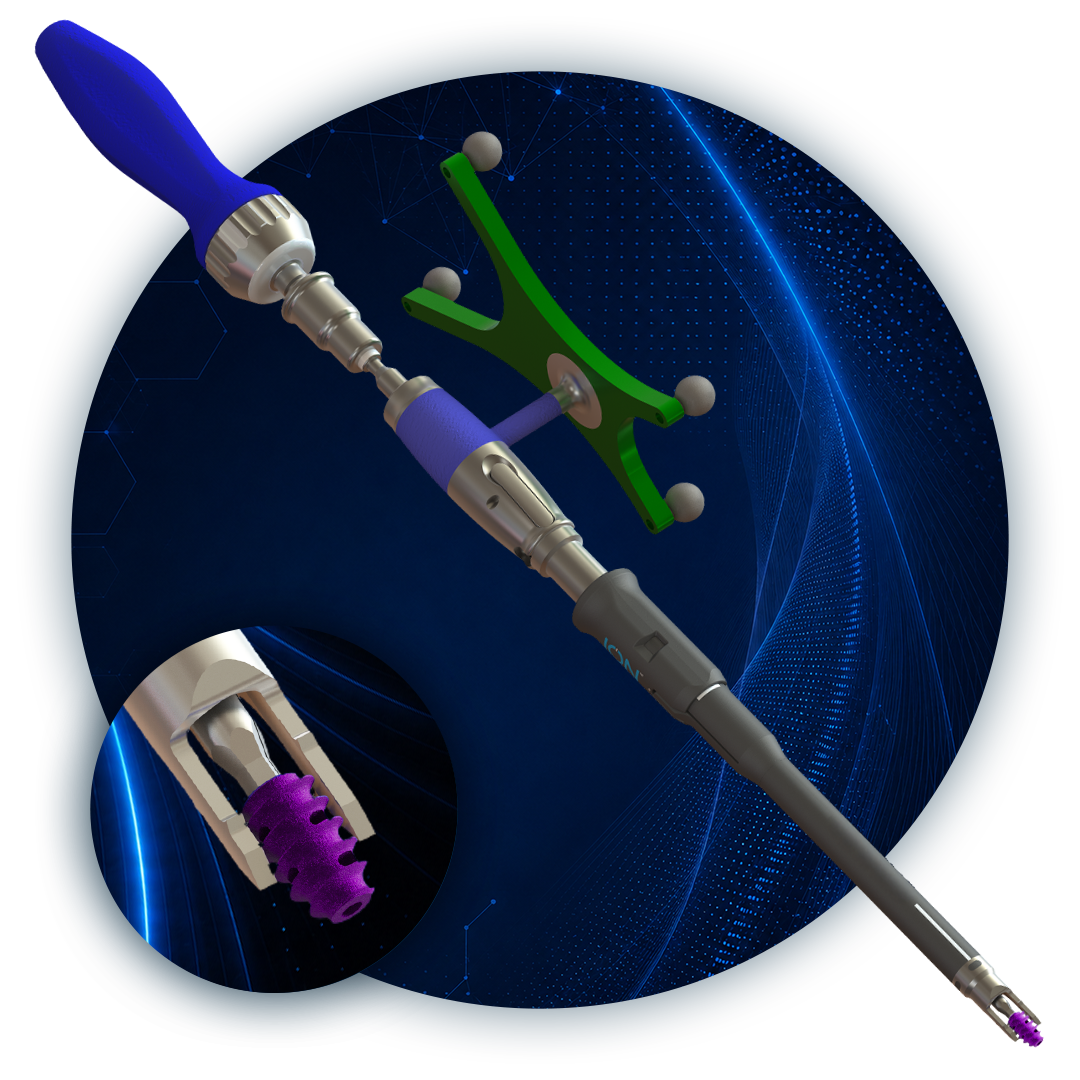
ION-L™ Specs
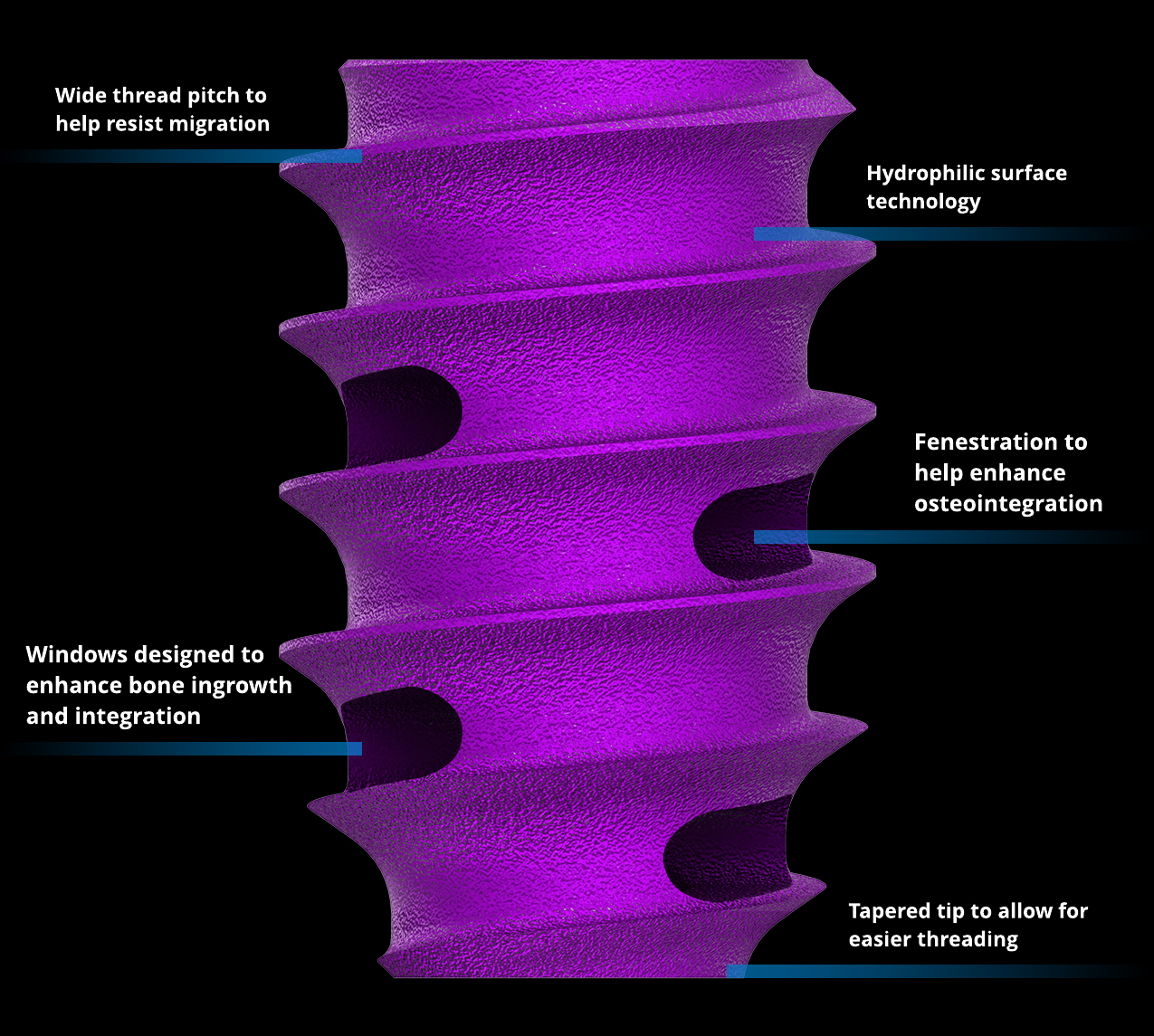
INDICATIONS FOR USE/INTENDED USE
ION-L™ is indicated for the treatment of patients with degenerative disc disease (DDD) from L3–S1 in skeletally mature patients who have failed conservative care.
The system is intended to be placed bilaterally through a posterior surgical approach and spans the facet joint interspace to provide stabilization and support fusion when used in accordance with its cleared indication.
Histology Review
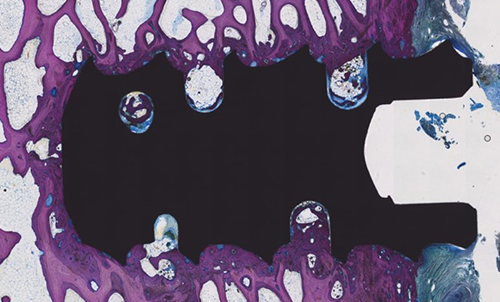
Ovine spine study at three (3) months revealed
mature bone formation to Nanotex® surface with no
delamination
This information is based on an animal study of the Ion-L device, and may not be representative of clinical performance
Blood Wicking
 The hydrophilic surface created by Nanotex® technology takes advantage of ionic bonds to attract and hold blood, BMA, and other fluids that may contain key growth factors necessary for osseointegration
The above claim is based on an animal study and may not be representative of clinical performance1
1. Taniguchi, N., Fujibayashi, S., Takemoto, M., Sasaki, K., Otsuki, B., Nakamura, T., ... & Matsuda, S. (2016). Effect of pore size on bone ingrowth into porous titanium implants fabricated by additive manufacturing: An in vivo experiment. Materials Science and Engineering: C. 59, 690-701